Some books do not feel like books in the usual way. They feel more like a small lamp placed in the hands of a seeker.
The Holy Science by Sri Yukteswar Giri is one of those rare works. It is not a long book, not dramatic in language, and not written to impress the casual mind. It is quiet, direct, and almost austere. Yet within that simplicity, it carries an immense spiritual purpose: to show that truth is one, even when religions speak in different languages.
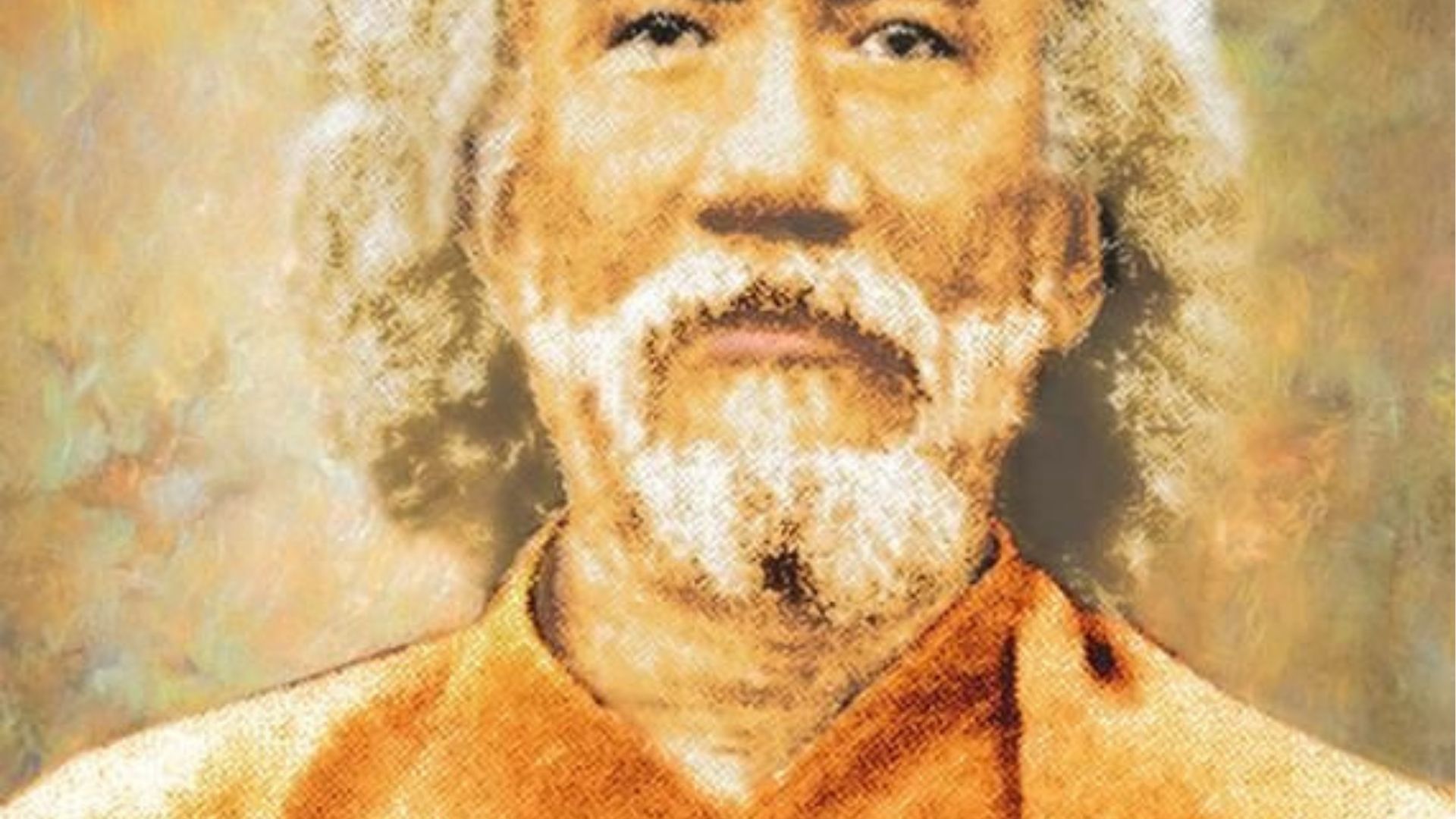
Sri Yukteswar, also written by some as Sri Yukteshwar, was the guru of Paramahansa Yogananda and a disciple of Lahiri Mahasaya. In the Kriya Yoga tradition, he is remembered as Jnanavatar, the incarnation of wisdom. This title suits him. His presence, as described by Yogananda, was not sentimental. He was sharp, clear, disciplined, and deeply compassionate in a way that did not always look soft from the outside.
His book reflects the same energy.
It does not try to flatter the reader. It tries to awaken the reader.
A Book Written for Unity
The central importance of The Holy Science is its vision of unity.
Sri Yukteswar wrote it to reveal the underlying harmony between the spiritual teachings of the East and West, especially between Hindu scriptures and the Christian Bible. In a world where religion is often used to divide people, this itself is a bold act of spiritual courage.
The book does not say all religions are identical in outer form. Of course they are not. Their rituals, languages, symbols, and cultural expressions differ. But Sri Yukteswar looks underneath these outer garments and asks a deeper question: What is the truth they are pointing toward?
His answer is simple and profound. The goal of life is the realization of the Divine. The soul must awaken to its true nature. The human being must move from ignorance to wisdom, from restlessness to inner union, from separation to God-consciousness.
That is why The Holy Science still matters. It reminds us that spiritual maturity is not about proving one path superior. It is about recognizing the golden thread running through sincere paths.
Why Sri Yukteswar’s Approach Feels Different
Sri Yukteswar did not write like a poet trying to decorate truth. He wrote like a sage trying to clarify it.
There is a certain cleanliness in the book. The chapters move through creation, the purpose of life, the method of spiritual realization, and the higher revelations that come as consciousness evolves. He does not waste words. At times, the writing can feel dense. You may have to pause, reread a line, sit with it, maybe even feel slightly confused before it opens.
And that is not a weakness.
Some spiritual texts are meant to be consumed. The Holy Science is meant to be contemplated.
A few of its major concerns include:
- The unity behind religious teachings
- The evolution of human consciousness
- The relationship between body, mind, soul, and Spirit
- The importance of natural living
- The role of meditation and inner discipline
- The movement of humanity through larger cycles of time
It is a book for seekers who want to go beneath surface spirituality.
The Bridge Between East and West
One of Sri Yukteswar’s great contributions was his ability to see the meeting point between Indian spiritual philosophy and Western religious thought.
This was not just intellectual comparison. It came from realization. He understood that scriptures become alive only when their inner meaning is grasped. Without inner experience, religion can become argument. With inner experience, scripture becomes a map.
In The Holy Science, he uses parallel ideas from Hindu and Christian traditions to show that both speak of the same ultimate journey. The language may differ. One tradition may speak of Brahman, Atman, Pranava, or Kaivalya. Another may speak of God the Father, Christ consciousness, the Holy Spirit, or the Kingdom of Heaven. But beneath the words, Sri Yukteswar sees one movement: the soul returning to its Source.
This matters deeply today.
Many people are spiritually curious but religiously wounded. Some have inherited shame, fear, or confusion from rigid interpretations of faith. Others feel drawn to spirituality but do not want to reject their ancestral religion. Sri Yukteswar offers a wider doorway. He does not ask the seeker to hate one tradition in order to honor another.
He invites the heart to recognize truth wherever it shines.
The Holy Science and Kriya Yoga
Sri Yukteswar’s book is also important because of its connection to the Kriya Yoga lineage.
He was part of the sacred line that flowed through Mahavatar Babaji, Lahiri Mahasaya, Sri Yukteswar, and Paramahansa Yogananda. Through Yogananda, Kriya Yoga reached millions of seekers across the world.
In that lineage, spirituality is not only belief. It is practice. It is inner experiment. It is the discipline of meditation, breath, moral living, and God-remembrance.
This is one reason the title The Holy Science is so meaningful.
The word “science” does not make the book cold or mechanical. It points to method, law, and direct experience. Sri Yukteswar presents spirituality as something that can be lived and verified inwardly, not merely defended through doctrine.
The holy life is not vague. It has principles.
The soul’s return is not random. It has a path.
The Teaching on Yugas
Another significant part of The Holy Science is Sri Yukteswar’s explanation of the yuga cycle, the great ages of human development.
His interpretation differs from more common traditional calculations. He described humanity as moving through a 24,000-year cycle linked with changing levels of awareness and virtue. In his view, humanity had moved out of the darkest age and entered Dwapara Yuga, an age more aware of energy, subtle forces, and scientific discovery.
Whether one reads this literally, symbolically, or philosophically, the idea is fascinating. Sri Yukteswar was not only looking at individual awakening. He was looking at the spiritual movement of civilization.
That gives the book a cosmic feeling.
It suggests that humanity is not stuck forever in confusion. Consciousness rises and falls. Cultures forget and remember. Ages darken and brighten. The Divine rhythm continues, even when the world looks chaotic.
For a modern reader, this can bring a strange kind of hope. Not naive hope, but patient hope.
Natural Living and Inner Clarity
One tender but practical part of Sri Yukteswar’s teaching is his attention to natural living.
He does not separate spiritual realization from the way we live in the body. Food, conduct, self-control, moral strength, simplicity, and love all matter. The spiritual path is not only about what happens in meditation. It is also about how we eat, speak, think, work, and treat others.
This is where The Holy Science becomes very grounded.
It says, in essence, that the Divine is not found by escaping life irresponsibly. The body must be cared for. The mind must be purified. The heart must be softened. The will must be trained.
A sincere seeker can take a few simple reflections from this:
- Spirituality needs daily discipline, not only emotional inspiration
- The body and mind influence meditation
- Love is not weakness, but a force that harmonizes life
- Simplicity creates space for higher awareness
- True religion should make a person more balanced, not more rigid
These teachings are still needed. Maybe more than ever.
Why the Book Still Matters Today
We live in a time of too much information and not enough wisdom.
People can read ten spiritual quotes before breakfast and still feel inwardly empty. We can know the vocabulary of awakening without living its discipline. We can speak of energy, consciousness, and manifestation while remaining impatient, scattered, and disconnected from the soul.
The Holy Science cuts through that.
It brings the seeker back to essentials. Who am I? What is the purpose of this life? What is the nature of creation? How does the soul return to God? What kind of living supports realization?
These are not small questions. They are the kind of questions that slowly rearrange a life.
Sri Yukteswar’s greatness lies in his clarity. He does not give spirituality as decoration. He gives it as a path of alignment. His book is important because it teaches that truth is universal, realization is possible, and the human being is far more than a restless mind moving through temporary pleasures.
A Final Reflection
The Holy Science may not be the easiest spiritual book to read, but it is one of those books that keeps waiting for the reader to become ready.
At first, it may seem intellectual. Later, it begins to feel luminous. Not because every sentence is immediately simple, but because the intention behind it is pure. Sri Yukteswar was not trying to create another division in the world. He was trying to heal one.
He offered a vision where East and West could meet, where religion could become realization, where science and spirituality could speak to each other, and where the seeker could walk toward God with both devotion and discernment.
That is the importance of The Holy Science.
It is a small book with a vast sky inside it.
Sources Consulted
- Yogoda Satsanga Society of India, “The Holy Science,” for details on Sri Yukteswar Giri, his role as guru of Paramahansa Yogananda, and the book’s purpose of revealing the unity of Christian and Hindu scriptures.
- Self-Realization Fellowship, “Lineage and Leadership,” for Sri Yukteswar’s birth details, connection with Lahiri Mahasaya, title as Jnanavatar, and the traditional account of Mahavatar Babaji asking him to write on the harmony between Christian and Hindu scriptures.
- Self-Realization Fellowship, “Glossary & Pronunciation Guide,” for Sri Yukteswar’s place in the Kriya Yoga lineage and the reference to the 24,000-year Equinoctial Cycle described in The Holy Science.
- Yogoda Satsanga Society of India, “Swami Sri Yukteswar’s Avirbhav Meditation,” for YSS context on Sri Yukteswar as Jnanavatar and The Holy Science as a treatise exploring parallel scriptural passages and the unity of religions.
- Self-Realization Fellowship, “Kriya Yoga, Royal Technique of God-Realization,” for the lineage context of Kriya Yoga as a path of soul liberation and direct communion with God.