There is something quietly powerful about the spine.
Most of the time, we do not think about it. We sit, walk, bend, pray, breathe, turn our head, lie down, rise again. The spine is there through all of it, holding us in a way that is both physical and almost symbolic. In yoga, this is not seen as a small thing. The spine is treated as the central axis of the body, the inner staff, the place where stability and awakening meet.
When a yoga teacher says, “Lengthen the spine,” it can sound like a simple posture cue. But if you stay with it for a moment, it becomes something deeper. Lengthening the spine is not only about sitting straight. It is about creating space inside yourself. Space for breath. Space for awareness. Space for energy to move without being trapped in old tension.
The spinal cord and vertebrae are deeply important in yogic practices because they form the bridge between body, nervous system, breath, posture, and subtle awareness. Yoga may speak in spiritual language, but it begins with the body we are actually living in.
The Spine as the Body’s Sacred Support
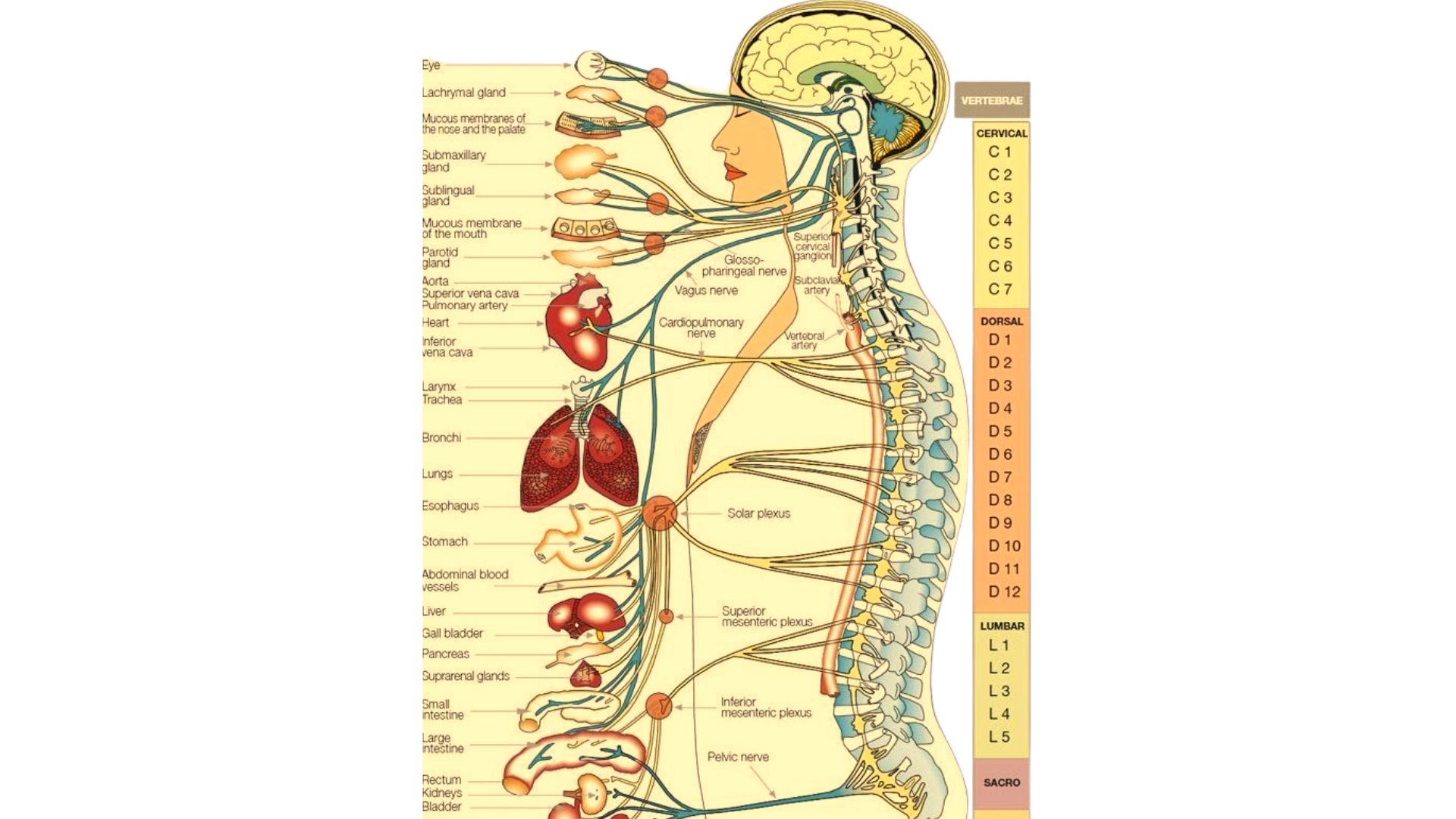
The spine is made up of a column of bones called vertebrae. These bones protect the spinal cord, which carries messages between the brain and the rest of the body. In simple words, the spinal cord is one of the main communication pathways of the nervous system.
The spine has five main regions:
- Cervical spine, around the neck
- Thoracic spine, through the upper and middle back
- Lumbar spine, in the lower back
- Sacrum, at the back of the pelvis
- Coccyx, the tailbone
Each part has its own role. The neck allows movement and balance of the head. The thoracic spine supports the rib cage. The lumbar spine carries much of the body’s weight. The sacrum and coccyx ground the spine into the pelvis.
This is why spinal awareness matters so much in yoga. We are not moving one solid rod. We are moving a living column, built for both strength and flexibility.
Why Yogis Give So Much Attention to the Spine
In yogic practice, the spine is more than anatomy. It is the central line of awareness.
During meditation, the spine helps the body remain steady. During pranayama, or breath practice, an open and upright posture allows the lungs and diaphragm to move with more freedom. During asana, or physical postures, spinal movement helps release stiffness and improve body awareness.
A slouched spine often makes the breath shallow. A rigid spine can make the mind feel tense. A lifted but relaxed spine creates a different inner climate. It is alert, but not aggressive. Soft, but not collapsed.
That balance is very yogic.
The spine teaches us how to be awake without becoming hard.
The Spinal Cord and the Nervous System
The spinal cord is protected by the vertebrae, but it is not just hidden inside the back. It is involved in movement, sensation, reflexes, and communication between the brain and body.
This is one reason yoga can feel so calming when practiced properly. Gentle movement, steady breathing, and mindful awareness can influence the nervous system. A slow practice may help the body move away from constant stress mode and toward a state that feels safer, quieter, and more regulated.
Anyone who has rested in child’s pose after a long day knows this feeling. The body softens. The breath comes back. The mind stops shouting for a moment.
It is not magic in the dramatic sense. It is the intelligence of the body responding to care.
The Yogic View of Sushumna Nadi
Traditional yoga also speaks about subtle anatomy. One of the most important ideas is sushumna nadi, described as the central energy channel running along the axis of the spine.
It is important to say this clearly: sushumna nadi is not the same as the physical spinal cord. The spinal cord belongs to the nervous system. Sushumna belongs to yogic subtle anatomy. But the two are often spoken of together because both point to the same central region of the body.
In yogic thought, spiritual energy rises through this central channel. The chakras are also traditionally placed along this inner axis, from the base of the spine upward. Whether someone understands this literally, symbolically, or meditatively, the message is beautiful: when the spine becomes steady, the inner world can also become steady.
This is why sitting upright during meditation has always mattered. The posture itself becomes a prayer.
How Yogic Postures Support the Spine
Yoga supports the spine through movement in many directions. A balanced practice usually includes gentle forward bends, backbends, twists, side stretches, and neutral alignment.
Some simple spinal movements include:
- Cat and cow for gentle flexion and extension
- Seated twists for mobility and awareness
- Cobra or sphinx for opening the front body
- Child’s pose for rest and release
- Mountain pose for alignment and grounding
- Bridge pose for strengthening the back body
But yoga is not about forcing the spine into impressive shapes. This is where many people misunderstand the practice. A deep backbend is not automatically more spiritual than a simple seated posture. A strong twist is not better if the breath is strained.
The spine responds best to patience. It likes warmth, attention, and respect.
The Lower Back and the Need for Care
The lower back is one of the most sensitive areas for many people. Long sitting, weak core muscles, emotional stress, poor posture, and sudden movement can all create discomfort there.
In yoga, the lumbar spine should not be treated casually. It needs both mobility and support. Too much forcing in forward folds or backbends can create strain. Too much collapse in sitting can also create pressure.
A few gentle reminders are useful:
- Bend the knees in forward folds if the lower back feels tight
- Keep the belly gently engaged during backbends
- Avoid twisting deeply from the lower back
- Move with breath rather than momentum
- Stop if there is sharp pain, numbness, or tingling
- Use props without feeling like it is “less advanced”
Props are not weakness. They are wisdom.
The Emotional Language of the Spine
The spine also seems to carry our emotional weather.
When we feel afraid, we may shrink. When we feel ashamed, the chest closes. When life feels heavy, the shoulders round. When we feel clear and confident, the spine naturally rises.
This does not mean every back issue is emotional. That would be too simplistic. The body is complex. Still, yoga gently reveals how posture and feeling often speak to each other.
A slow spinal practice can feel like a quiet conversation with yourself. You may notice where you hold. You may notice where you push. You may notice that your body has been asking for softness for a long time.
Sometimes the most spiritual thing in a practice is not a vision or a deep meditation. Sometimes it is simply realizing, “I have been holding too much.”
Spine Awareness in Daily Life
The real beauty of yoga is that it does not stay only on the mat.
You can bring spinal awareness into ordinary moments. Sitting at your desk. Standing in a queue. Walking after dinner. Breathing before sleep. Even the simple act of lifting the chest gently and relaxing the shoulders can change the way you inhabit your body.
Try this for a moment:
- Sit or stand comfortably
- Feel the base of your spine grounding downward
- Let the crown of your head rise gently upward
- Relax the jaw
- Let the breath move naturally
- Notice if the body feels even slightly more awake
This is not complicated, but it is powerful. The spine becomes a reminder to return to your center.
The Spine as a Bridge Between Earth and Spirit
In yogic practice, the spine is where grounding and rising meet.
The base of the spine connects us with steadiness, survival, and the earth. The upper spine opens toward the heart, throat, and crown. Between these points, the human body becomes a living bridge. Breath moves through it. Awareness gathers around it. Prayer becomes embodied through it.
When we care for the spinal cord and vertebrae, we are not only caring for posture. We are caring for the pathway through which the body communicates, breath expands, and meditation deepens.
The spine is not just something to stretch.
It is something to honor.
A steady spine can help create a steady mind. A softer back can sometimes make space for a softer heart. And with every conscious breath, the body remembers what yoga has always known: the path upward begins by coming back into the body, gently, honestly, one vertebra at a time.