There are some spiritual figures who seem to belong less to history and more to the inner sky of humanity.
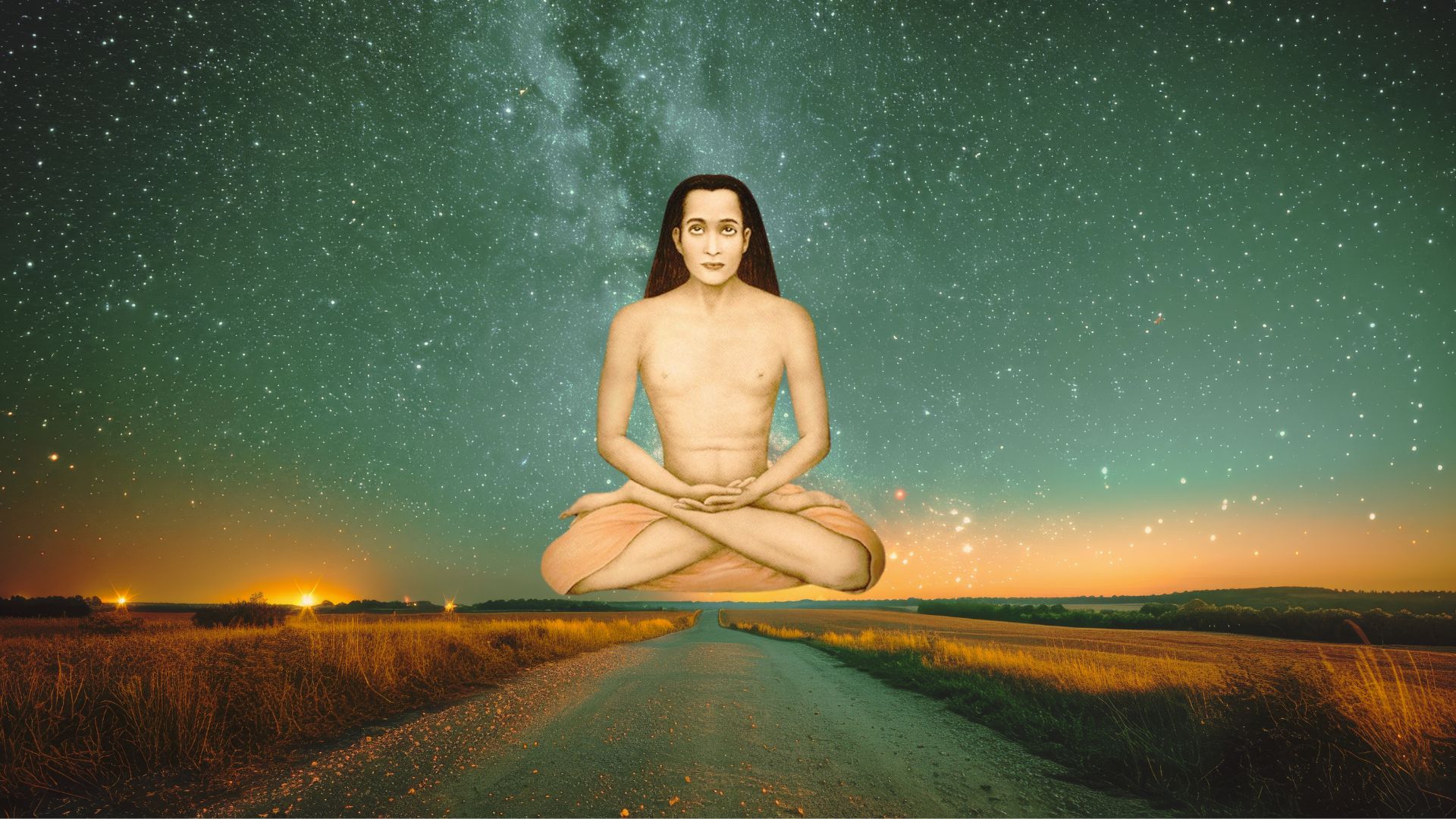
Mahavatar Babaji is one of them.
To speak about him is not like writing about a teacher with a clear public biography, dates, lectures, photographs, and recorded institutions. Babaji lives in a different kind of memory. He is remembered through lineage, devotion, yogic testimony, and the luminous pages of Autobiography of a Yogi by Paramahansa Yogananda. For many seekers, he is not only a saint from the Himalayas. He is the silent force behind the modern revival of Kriya Yoga.
And perhaps that is why his presence feels so unusual.
He does not stand at the front of a movement. He does not build attention around himself. He appears, blesses, initiates, guides, and withdraws. Like the Himalayan wind, he is felt more than possessed.
Who Is Mahavatar Babaji?
The name Mahavatar is often understood as “great avatar” or “great divine incarnation.” Babaji means “revered father.” Even his name carries intimacy and mystery at the same time.
In the Kriya Yoga tradition associated with Lahiri Mahasaya, Sri Yukteswar, and Paramahansa Yogananda, Babaji is revered as the deathless Himalayan master who revived the ancient science of Kriya Yoga for the modern age. He is described as living in seclusion, appearing only when there is a divine purpose.
Now, this should be said with honesty. Babaji is not known to the world through ordinary historical records in the way many modern teachers are. Much of what people know about him comes through spiritual accounts, especially Yogananda’s writings and the oral tradition of Kriya Yoga lineages. That does not make him less meaningful. It simply means he must be approached with the right kind of respect.
Not as a celebrity.
Not as an internet myth.
But as a sacred presence carried through the faith and practice of countless seekers.
The Meeting With Lahiri Mahasaya
The central moment in Babaji’s story is his meeting with Lahiri Mahasaya in 1861 near Ranikhet in the Himalayas.
Lahiri Mahasaya was not a monk living away from the world. He was a householder, a married man with work and family responsibilities. This detail is very beautiful, and easy to miss. Babaji did not revive Kriya Yoga only for cave-dwellers or renunciates. Through Lahiri Mahasaya, the teaching entered the homes of sincere seekers.
This gave Kriya Yoga a very human doorway.
It said, in its own quiet way, that spiritual awakening is not limited to ashrams, forests, or saffron robes. A person can live in the world and still live inwardly with God. A person can fulfill duties and still breathe the breath of liberation. The sacred path can pass through kitchens, offices, family life, grief, bills, children, aging parents, and ordinary mornings.
That may be one of Babaji’s greatest gifts to the modern age.
He brought the ancient path close to the living human heart.
Why Babaji Is Called the Mahaguru of Kriya Yoga
A guru guides. A great guru transforms. A Mahaguru does something even subtler. He holds a stream of divine work that continues beyond one personality, one lifetime, one institution, or one place.
Babaji is called the Mahaguru of Kriya Yoga because the modern Kriya lineage looks back to him as its hidden source. He initiated Lahiri Mahasaya. Lahiri Mahasaya taught householders and advanced disciples. Sri Yukteswar carried the wisdom forward. Paramahansa Yogananda brought Kriya Yoga to a global audience, especially after going to the West in 1920.
This lineage matters because it shows that authentic spiritual transmission is not random. It is protected through discipline, devotion, and responsibility.
The flow is often remembered like this:
- Mahavatar Babaji, the hidden Himalayan master
- Lahiri Mahasaya, the householder yogi
- Swami Sri Yukteswar, the sharp and luminous guru
- Paramahansa Yogananda, the messenger of Kriya Yoga to the world
Through this chain, Babaji’s presence did not remain locked in the Himalayas. It entered modern spiritual life.
Kriya Yoga: The Inner Science of Returning to God
Kriya Yoga is often described as a sacred science of meditation. In Yogananda’s tradition, it is connected with breath, life-force, concentration, and the gradual stilling of the restless mind.
But beyond descriptions, Kriya Yoga carries a simple longing: to return the scattered human being to the Divine center.
Our energy is usually running outward. We are pulled by worry, memory, desire, screens, conversations, and the endless noise of becoming somebody. Kriya Yoga gently reverses this outward flow. It invites life-force inward and upward. It teaches the seeker to sit, breathe, concentrate, and remember the soul.
This is not a path of instant emotion. It is not meant to be spiritual entertainment. Kriya asks for regular practice. It asks for sincerity when the mind is restless. It asks for devotion when nothing dramatic seems to happen.
That is where Babaji’s presence becomes meaningful. He represents the unseen grace behind steady practice. The reminder that every sincere breath offered to God is heard.
Babaji’s Silence Is Part of His Teaching
Many spiritual teachers are known through words. Babaji is known through silence.
There is something powerful in that. In an age where everyone wants to be seen, Babaji remains almost completely hidden. He does not need public proof. He does not seek followers in the ordinary way. His work moves through the inner lives of those who are ready.
This silence teaches a different kind of spirituality.
Not all sacred work has to be visible.
Not all guidance comes loudly.
Not every master needs a platform.
For seekers, this can be deeply comforting. The Divine does not always arrive with thunder. Sometimes it arrives as a quiet pull toward meditation. A sudden longing for truth. A strange protection in a difficult season. A mantra that begins to breathe itself inside the heart.
Babaji’s mystery reminds us that spiritual life is larger than what the mind can document.
What Babaji Represents for Today’s Seeker
Babaji is not only important because of what he did in the past. He matters because of what he still represents.
For the modern seeker, his life points toward:
- Discipline without harshness
- Devotion without superstition
- Inner practice over outer display
- Sacred transmission through authentic guidance
- Spiritual life within ordinary responsibilities
- Direct experience instead of borrowed belief
He also reminds us to be careful. The name of Babaji is sometimes used loosely today, and many claims circulate around him. A sincere seeker should remain open-hearted but not naive. True spirituality does not remove discernment. It deepens it.
If a teaching invokes Babaji but creates fear, ego, exploitation, or dependency, something is wrong. The fragrance of a true path is usually quieter. It makes a person more humble, more loving, more steady, and more inwardly free.
The Inner Babaji
Maybe the deepest way to understand Mahavatar Babaji is not only as a master somewhere in the Himalayas, but as a living symbol of the guru principle itself.
The guru principle is the Divine guidance that awakens the soul. Sometimes it comes through an outer teacher. Sometimes through scripture. Sometimes through suffering that breaks our pride. Sometimes through silence that cleans the heart. And sometimes, very rarely, through a master whose presence cannot be explained by ordinary measures.
Babaji stands for that hidden mercy.
He is the reminder that humanity is not spiritually abandoned. Even when the world becomes noisy, distracted, and spiritually tired, there are beings and lineages holding the lamp. There are paths preserved for those who truly seek. There is grace working behind the curtain.
Not everyone will feel connected to Babaji, and that is okay. Spiritual love cannot be forced. But for those who do feel his call, it is often quiet and unmistakable. A pull toward meditation. A reverence for Kriya Yoga. A feeling that the Himalayas are not only a place on a map, but a region of consciousness.
A Final Reflection
Mahavatar Babaji does not ask to be understood fully. Maybe no true mystery does.
He invites something more intimate than understanding. Practice. Reverence. Purity of intention. A willingness to sit still and turn the breath toward God.
As the Mahaguru of Kriya Yoga, Babaji represents the hidden stream of divine guidance flowing through time. He reminds us that the greatest masters do not always leave monuments. Sometimes they leave a method. A blessing. A lineage. A doorway.
And for the sincere seeker, that doorway is enough.
One breath enters.
One breath leaves.
Somewhere in that simple movement, the soul begins its journey home.
Sources Consulted
- Self-Realization Fellowship, “Mahavatar Babaji,” for the traditional Kriya Yoga account of Babaji as the one who revived Kriya Yoga and initiated Lahiri Mahasaya.
- Yogoda Satsanga Society of India, “Mahavatar Babaji,” for the YSS biography and devotional lineage perspective on Babaji.
- Yogoda Satsanga Society of India, “The Kriya Yoga Path of Meditation,” for the account of Kriya Yoga being reintroduced in modern times through Babaji and Lahiri Mahasaya.
- Yogoda Satsanga Society of India, “150 Years of Kriya Yoga,” for the traditional dating of Lahiri Mahasaya’s meeting with Babaji near Ranikhet in 1861.
- Self-Realization Fellowship, “Kriya Yoga Path of Meditation Overview,” for the SRF description of Kriya Yoga as a path of meditation and union with Bliss.
- Yogoda Satsanga Society of India, “Autobiography of a Yogi,” for the role of Yogananda’s book in introducing many readers to India’s yoga traditions and the Kriya Yoga lineage