There are some ideas that sound beautiful the moment we hear them, but feel difficult when we actually try to live them. Universal love is one of those ideas.
It sounds luminous. Spacious. Almost effortless. To love all beings, all people, all life — what could be more sacred than that? And yet the moment we bring it down from poetry into ordinary life, it becomes much more demanding. It asks us how we look at strangers, how we respond to hurt, how quickly we divide the world into “mine” and “not mine.” It asks whether love is only a feeling, or whether it is also a way of seeing.
That, I think, is where this topic becomes real.
The first question is whether universal love actually exists at all, or whether it is only a spiritual ideal made to inspire us from a distance. I dont think it is imaginary. I think its real, but not always in the dramatic way people expect. Universal love does not always arrive as overwhelming emotion. Sometimes it appears as an inner stance — a widening of the heart, a refusal to deny another person’s humanity, a sincere wish for the good of life beyond one’s own little circle.
In Christian thought, the word agape came to signify the highest form of love: transcendent, self-giving, and expressed not only toward God but through unselfish love of other human beings. Britannica describes agape in the New Testament as the highest form of love and notes that it extends into unselfish love of one’s fellow humans.
That matters because it tells us something very old and very human: love has long been understood as capable of growing beyond preference. Beyond chemistry. Beyond exchange. Beyond “I love you because you are mine.” Universal love begins where possession ends.
Still, many people hear this and quietly object: Do human beings really love like that? Or are we just selfish creatures wearing spiritual language?
Philosophy has wrestled with that question seriously. The Stanford Encyclopedia of Philosophy defines altruism as acting from a desire to benefit another person for that person’s sake, and it also points out that a single act can contain both altruistic and self-interested motives at once. In other words, pure selflessness may not always be the whole story, but genuine concern for others is not a fantasy either.
I find that comforting, honestly. Because it means universal love does not have to begin in perfection. It can begin in mixture. In sincerity that is still ripening. In a human heart that is not fully free of ego, but is no longer fully obedient to it either.
That is probably how most real spiritual growth happens.
Universal love exists first as capacity. A seed, maybe. A possibility planted very deeply in human nature and awakened more fully in spiritual life. We see flashes of it when a person helps someone they do not know. When grief softens a person instead of hardening them. When someone prays not only for their own peace but for the healing of all. When a person chooses compassion even after disappointment. These moments may seem small, but they are not small. They reveal that the self is not the only center we are able to live from.
But if universal love exists as capacity, it still must be realised. And that is the harder, holier work.
Realisation is not merely agreeing with the idea. Many people believe in love as a concept while living from irritation, judgment, superiority, fear, or indifference. Realisation means allowing love to become embodied — in thought, speech, conduct, reaction, and even attention. It means the heart slowly becoming less narrow.
That narrowing is what usually blocks universal love.
We live through hurt, betrayal, pressure, comparison, overstimulation, disappointment. Naturally, we begin protecting ourselves. We sort people quickly. We trust conditionally. We love selectively. Some of that is understandable. Life can bruise a person into caution. But spiritual life keeps inviting us beyond survival logic. It asks whether protection has become a prison. Whether discernment has become coldness. Whether self-respect has quietly turned into separation.
Universal love does not mean naivety. It does not mean having no boundaries. It does not mean pretending everyone is safe, wise, or good for you. This is important. Loving universally is not the same as giving equal access to everyone. It is possible to keep a boundary and still not poison the heart. It is possible to walk away from harm and still refuse hatred. That too is love, just in a more mature form.
So how is this love realised?
Usually, through purification first.
A heart crowded by resentment cannot hold universal love for long. A mind addicted to judgment cannot perceive the sacred worth in others. So spiritual traditions often begin not with “love everyone” but with clearing what blocks love. Pride. fear. greed. envy. wounded vanity. old bitterness. These things shrink the inner space. Universal love needs room.
Then comes practice.
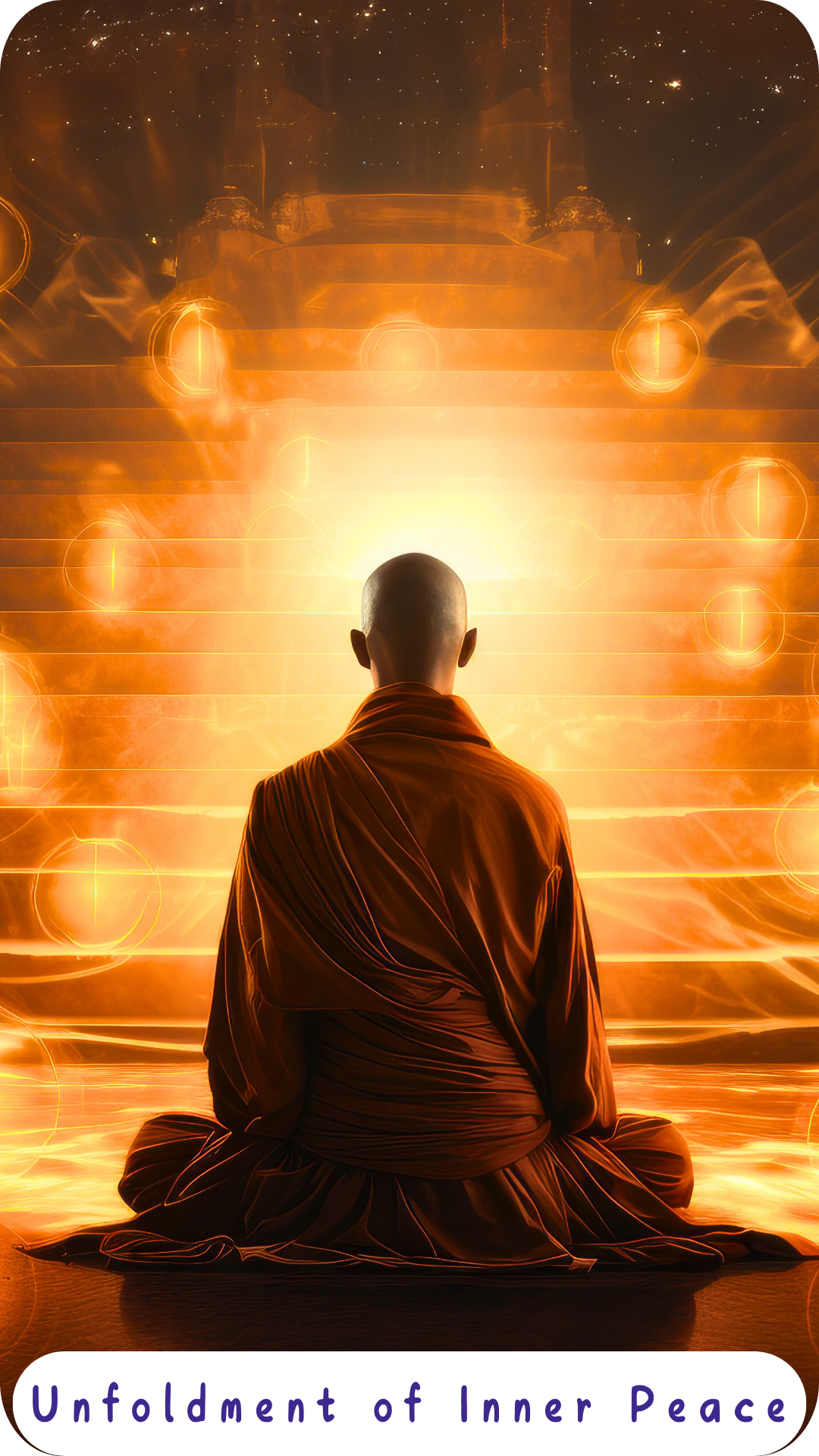
One of the clearest practical paths comes through loving-kindness meditation. A well-cited NIH-hosted review describes loving-kindness meditation as a practice aimed at developing an affective state of unconditional kindness toward all people, and a later study found that an eight-week loving-kindness intervention significantly increased participants’ altruism while reducing negative affect.
That is beautiful to me because it shows love is not only a mood. It can be cultivated. Trained. Strengthened.
This matters a lot, because many people are waiting to feel universal love before they begin living it. But often the order is reversed. You practice first. You bless first. You soften first. You restrain harsh speech first. You pray for those you naturally like, then for those you ignore, then slowly, maybe trembling a little, for those you find difficult. Practice changes the interior climate. What feels artificial in the beginning may become natural later.
Another way this love is realised is by deepening perception.
Most of us meet others through labels before we meet them through being. Religion, class, politics, status, usefulness, temperament, wounds, roles. Universal love does not deny difference, but it sees through difference into shared essence. It remembers that every person carries longing, fear, tenderness, and some invisible ache. Even the difficult ones. Even the defended ones. Even us.
And then there is service.
Nothing matures love quite like serving without making yourself the center of the goodness. Service unsettles the ego. It teaches the heart to move outward. Not heroically, not noisily, but steadily. A person who learns to help quietly often begins to love more widely too. Because attention is no longer trapped in the small room of self-concern.
Prayer helps. Silence helps. Honest repentance helps. So does grief, strangely enough. Sometimes loss breaks the hard shell around a person and reveals a more universal tenderness beneath it. After certain sorrows, people stop asking only, “Who belongs to me?” and begin asking, “How do I belong to life itself?”
That question can change a soul.
The real sign of universal love is not emotional intensity. It is spaciousness. Less hatred. Less contempt. Less eagerness to exclude. More reverence for life. More patience. More willingness to bless. More ability to wish well even where closeness is not possible.
That is how its realised — not in one grand moment, usually, but in hundreds of inner corrections. A little less self. A little more mercy. A little less fear. A little more room.
So yes, I believe universal love exists.
Not always as a perfected state. Not in every moment. Not in everyone equally awake. But as truth, as potential, and as a path — yes, absolutely. It exists wherever the heart begins to outgrow its own borders. It exists wherever another being is seen not as an object, obstacle, or category, but as worthy of goodwill. And it becomes real, more and more real, each time we choose to live from that wider center.
Maybe that is what spiritual maturity really is.
Not becoming special. Not becoming superior. But becoming wide enough, clean enough, and quiet enough for love to stop being private.
Sources
- Encyclopaedia Britannica, Agape.
- Stanford Encyclopedia of Philosophy, Altruism.
- NIH/PMC, Loving-Kindness and Compassion Meditation; and The effect of loving-kindness meditation on employees’ mindfulness, affect, altruism and knowledge hiding.