In the vast tapestry of human faith, few prayers are as familiar, beloved, and deeply meaningful as the Lord’s Prayer. Known also as “Our Father,” this prayer – given by the divine Teacher Himself – has echoed through centuries, across languages and cultures, inviting believers into an intimate communion with God. For many, it is more than a set of words: it is a bridge between earth and heaven, a source of hope, solace, and guidance. In this post, we explore the history, meaning, and gentle power of the Lord’s Prayer – and how reciting it can bring calm, clarity and spiritual connection.
Roots in Scripture and Early Church
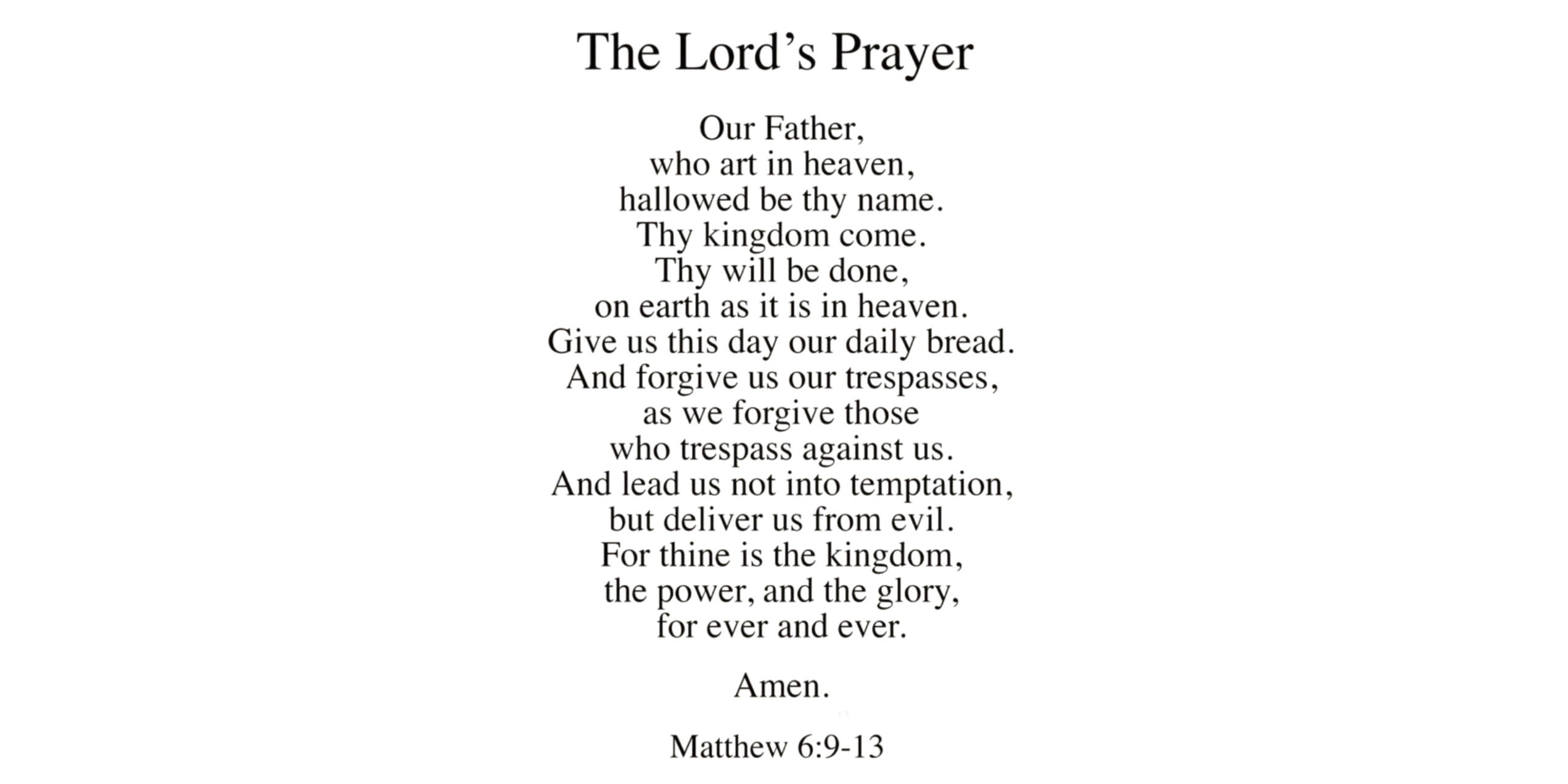
The Lord’s Prayer first appears in the sacred pages of the New Testament – in the Gospel of Matthew (Matthew 6:9- 13) and Gospel of Luke (Luke 11:2- 4). In Matthew’s account, the prayer is part of the larger teaching known as the Sermon on the Mount, where Jesus invites his followers to pray in sincerity- not for show, but from the heart. In Luke, the request comes directly from a disciple: “Lord, teach us to pray,” echoing a similar request made of John the Baptist’s disciples – and Jesus responds by giving this simple, profound prayer.
Beyond the Gospels, early Christians adopted this prayer quickly. A very early Christian writing, Didache – often considered one of the first catechisms of the Church – includes the Lord’s Prayer and suggests praying it three times a day.
By the Middle Ages, the prayer was widely known in its Latin form – called Pater Noster – even among those who were not literate. Over time, as Christianity spread, the prayer was translated into many languages, becoming a global spiritual heritage.
Thus, what began as a simple teaching from Jesus became a foundational prayer for believers through the centuries – personal and communal, humble and universal, timeless and ever-fresh.
The Structure and Meaning
What makes the Lord’s Prayer deeply powerful is not just its age or tradition – but the profound simplicity and balance in its structure. It guides us from reverent worship to humble petition, from personal need to communal concern. Let us walk slowly through its lines.
“Our Father in heaven, hallowed be your name.”
We begin by addressing God intimately – “Our Father” – while recognising His holiness. This line reminds us of both intimacy and reverence. We speak to God not with lofty, complicated words, but as beloved children. It sets the tone: prayer is a relationship.
“Your kingdom come, your will be done, on earth as it is in heaven.”
Here we ask not for our own agenda, but for God’s will – for His kingdom, His goodness, His justice, His love – to be manifested on earth as in heaven. This shifts our hearts outward, beyond our individual concerns, toward a spiritual vision that encompasses all.
“Give us today our daily bread.”
A humble appeal for provision – for our daily needs: physical, emotional, spiritual. It invites trust: that God cares for us moment by moment, day by day. It teaches contentment and dependence, rather than anxious striving.
“Forgive us our sins, as we forgive those who sin against us.”
We ask for mercy and grace, acknowledging our shortcomings – and we commit to mercy ourselves. This part calls us to humility, to compassion, to reconciliation. It is healing – for our souls, and for our relationships.
“Lead us not into temptation, but deliver us from evil.”
We seek God’s guidance and protection in the face of spiritual challenges, temptation, and the forces that threaten our peace. We acknowledge we cannot walk this spiritual path alone – we need divine strength and shielding.
(Some traditions add) “For thine is the kingdom, the power and the glory, forever.”
A doxology – a closing of praise and surrender: acknowledging God’s ultimate sovereignty, power, and glory. It reminds us that prayer is not just asking, but worship. In its brevity lies its power. The Lord’s Prayer does not rush; it flows from reverence to petition, from dependence to surrender. It captures our deepest longings – for connection, provision, forgiveness, guidance, peace.
Why the Lord’s Prayer Remains Relevant – Spiritual Significance for Today
- Communal and Universal – The prayer uses “our,” “us,” “we” – not “my.” It invites us to pray not only for ourselves, but for others. It binds believers across time and space into a shared spiritual family.
- A Template for Prayer – The Lord’s Prayer is not meant to be a rigid formula, but a living model. It teaches us to pray with honesty, humility, balance – combining worship, petition, confession, intercession.
- Timeless Depth, Evergreen Relevance – Whether in moments of plenty or scarcity, peace or turmoil, joy or sorrow – the prayer speaks to human longings for provision, forgiveness, guidance, and belonging. Its words are simple, but its reach is profound.
- Spiritual Grounding and Inner Peace – Reciting the Lord’s Prayer slowly, mindfully, can become a practice of meditation – a way to still the mind, align our hearts with divine will, surrender our burdens, and rest in trust.
How to Recite – Practical Guidance for a Peaceful Prayer
If you wish to embrace the Lord’s Prayer not just as words you know, but as a spiritual practice, here is a gentle, devotional way to approach it:
- Choose a quiet time and place. Early morning, twilight, or any moment of stillness – a corner of your home, a garden, a place of calm.
- Begin with silence. Take a few deep breaths, quiet your mind, and invite the presence of the Divine.
- Read slowly, phrase by phrase. Pause after each line. Let the meaning sink in. Feel the words – as praise, as petition, as longing.
- Personalise it in your heart. While preserving the original structure, let each petition reflect your inner reality – your hopes, your needs, your desire for God’s will.
- Pray for others too. Use “our,” “us,” “we” to include not just yourself, but family, friends, community, even world.
- Finish with gratitude and surrender. End with a moment of silent meditation – allow the prayer to anchor your heart in peace, trust, and love.
Over time, this can become a gentle rhythm – a daily touchpoint, a sacred pause, a way to reconnect with God.
Conclusion
The Lord’s Prayer – simple, timeless, sacred – offers us a path to intimacy with the Divine. From its origins in the Gospels, through centuries of devotion, it has carried the hopes, needs, confessions, and longings of countless souls. When we recite it with heart, with sincerity, with openness – it can become more than memory: it becomes an encounter.
If you have never prayed it slowly, meditatively – I invite you: find a quiet moment, breathe deeply, and let the words wash over you. Let them ground you, humble you, soothe you, remind you that you are beloved. Let them draw you closer – to God, to grace, to peace.
May the Lord’s Prayer not be just words on your lips – but a presence in your heart.